When someone impersonates you online: your digital identity needs protecting too
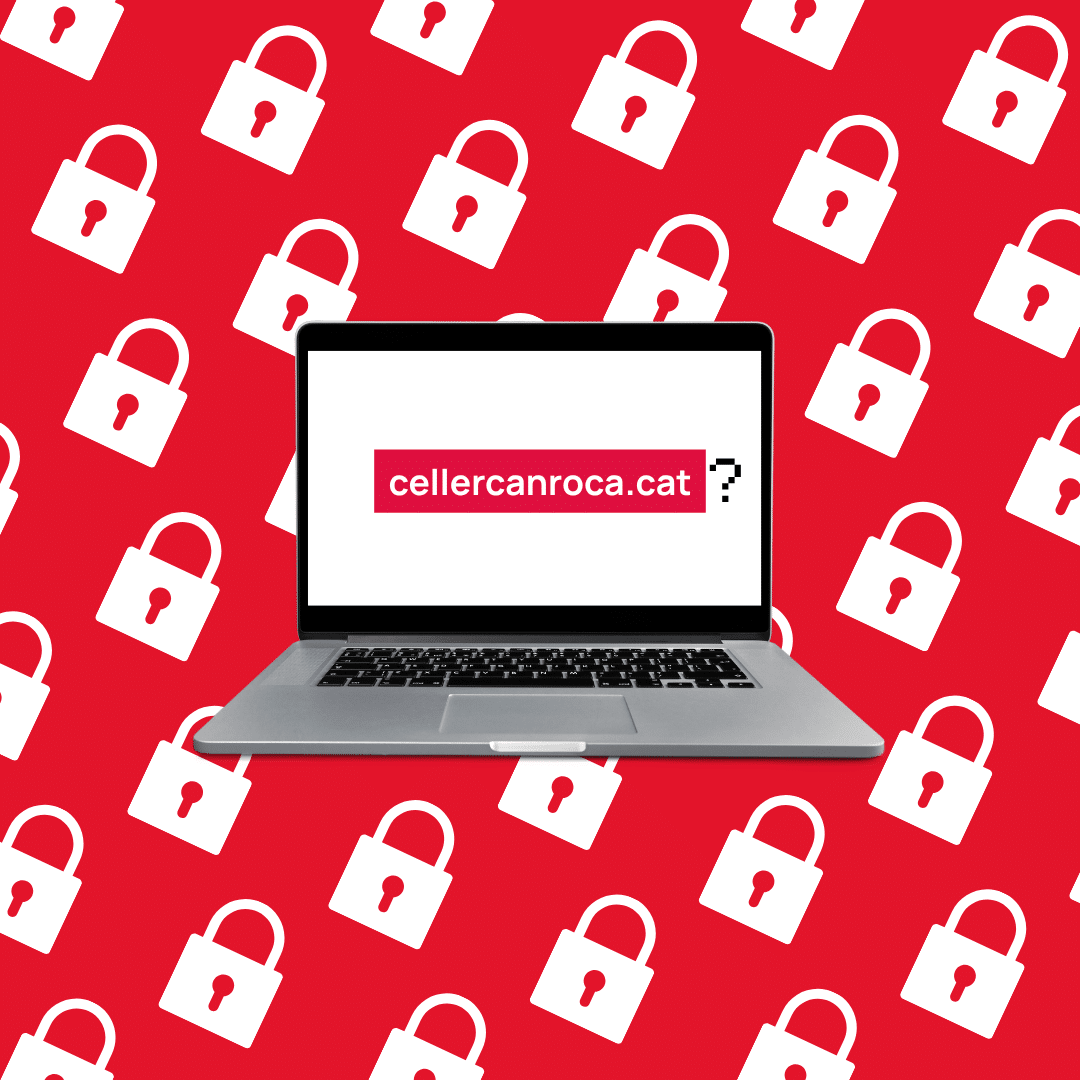
A few days ago, Jordi Roca, pastry chef and co-owner of El Celler de Can Roca —the Roca brothers’ restaurant in Girona— published a message on Instagram that left no room for doubt. He was furious. Someone had created a fake website imitating his restaurant and was charging money to manage reservations that would, of course, never materialise. A full-blown scam, concealed behind a domain convincing enough to deceive customers.
This is not an isolated case: Barcelona’s restaurant Disfrutar has been detecting fraudulent websites for over a year and has already had to report nearly ten of them. Cases like these remind us that the digital identity of businesses is something that needs to be actively protected, and that no brand — however established — is immune.
Nobody can have it all. But you can have what matters
When you register a domain, the question you immediately ask yourself is: how many extensions do I need to buy? The honest answer is that no matter how much you think a .com, a .es or a .info will do, if someone wants to impersonate you, they will find a way using any domain you have not yet taken. The number of possible domains in the world is so vast that nobody —not even the most powerful brand on the planet— can buy them all.
Having a .cat domain does not make your business immune to every impersonation attempt. But it does radically change the speed of response. In the case of Disfrutar, taking down a fraudulent website has taken them a day and a half at most. With a .cat domain, action is almost immediate. But there is a difference between total coverage — impossible — and meaningful coverage. And that is where the logic of the .cat domain comes in.
If you are a business that operates in Catalan, that has roots here, that speaks to a specific community and that represents — consciously or not — a piece of our culture, then the .cat domain bearing your name should belong to you. Not as an infallible shield against all fraud, but as a mark of ownership over your digital identity in the linguistic and cultural environment that defines you.
And the good news is that having it does not mean having to manage a new website. A .cat domain can be set up to automatically redirect to any other page: your .com version, your .es, or whichever one you normally use. We call this a “redirect”, and it is as simple as changing a car’s number plate without moving the car. What you achieve is that nobody can use that .cat domain to impersonate you, without you having to change anything about your usual workflow.
Gastronomy is culture. And culture needs a space of its own
The Roca case is no coincidence: El Celler de Can Roca is one of the most recognised restaurants in world gastronomy, and that is precisely why it is an attractive target for those who want to exploit someone else’s reputation. But the same can happen to any local restaurant, family winery or artisan bakery. Catalan gastronomy is living heritage: it is what we are and what we share with those who come from elsewhere. A gastronomic business with a .cat domain is not just a business with a different extension — it is a business that says: I am from here, I work in Catalan, I am part of this.
Digital identity is not a technical luxury
We often treat domains as a minor detail, a necessary formality to have a website. But a domain is much more than an address. It is your name on the Internet. It is what appears when someone searches for you, shares you, trusts you. And, like all names, it is worth protecting.
The case involving Jordi Roca on social media is a wake-up call that goes beyond cybersecurity. It reminds us that digital identity is something that needs to be thought about, cared for and, as far as possible, proactively protected. Not out of fear, but out of consistency. Because on the Internet, as in life, being yourself — and making sure nobody can take advantage of that — is a minimum condition for operating with confidence.
And if you think none of this applies to you, consider it from a more pragmatic angle too: having a .cat domain is, in most cases, less expensive than managing the consequences of not having one — just ask the Roca brothers. Having a .cat domain also means having an organisation behind you that, in the event of a problem, can act almost immediately: suspending a fraudulent domain, handling your case and doing so in your language. That is no minor detail when every day that passes with a fake website is a day your customers could be defrauded. You do not need to feel particularly attached to it to recognise that it is a sensible decision.
If you have a business that is part of our culture and speaks to our community, and you still do not have a .cat, you are risking someone else taking your space on the Internet. Maybe it is time to claim it?
Want to find out if the .cat domain for your business or project is available? Check it at domini.cat