

Twenty years of the .cat domain: a day to remember the past and imagine the future
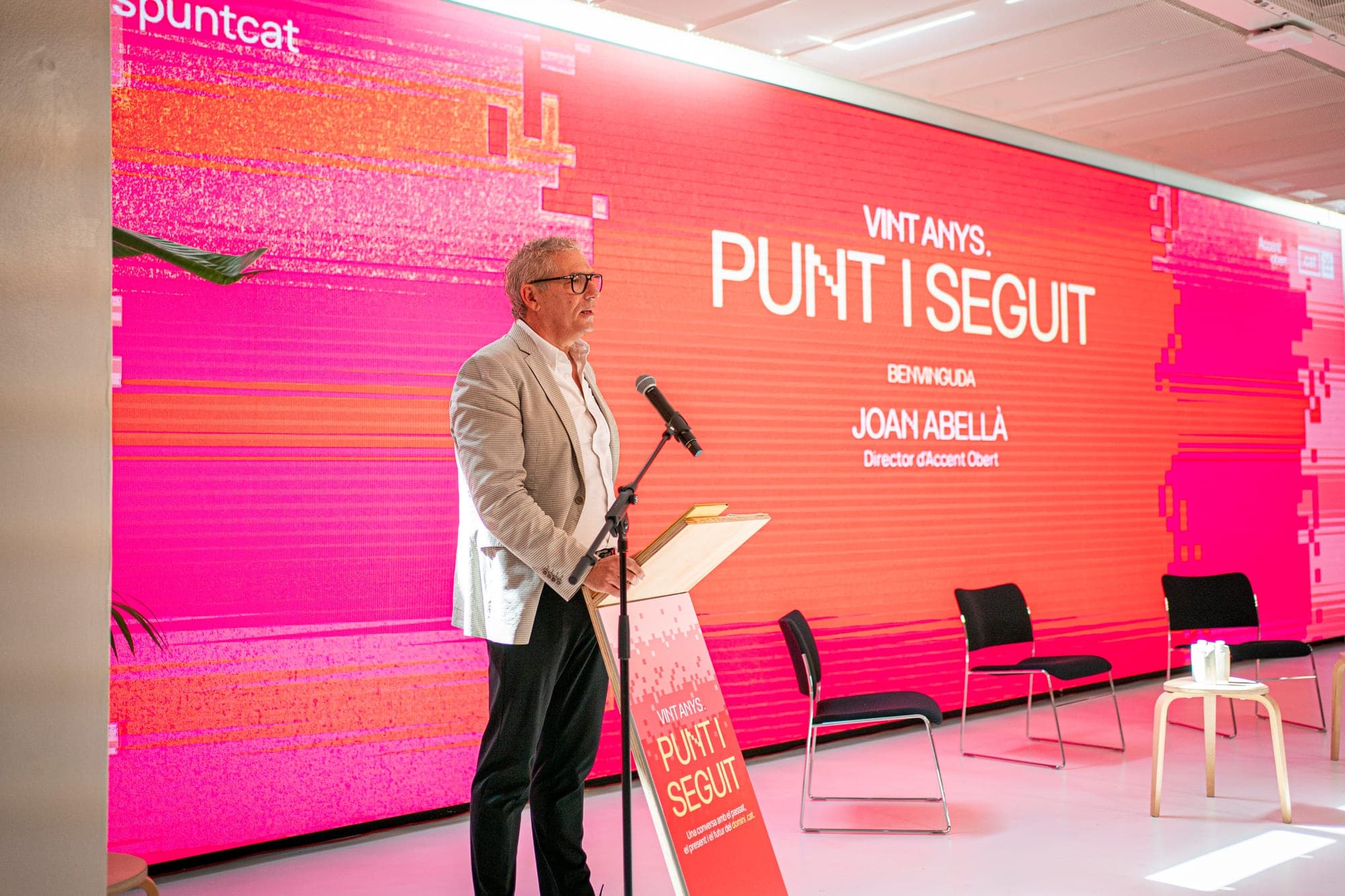

A day to remember the past and imagine the future: the people behind .cat look back on two decades and ahead to what comes next.
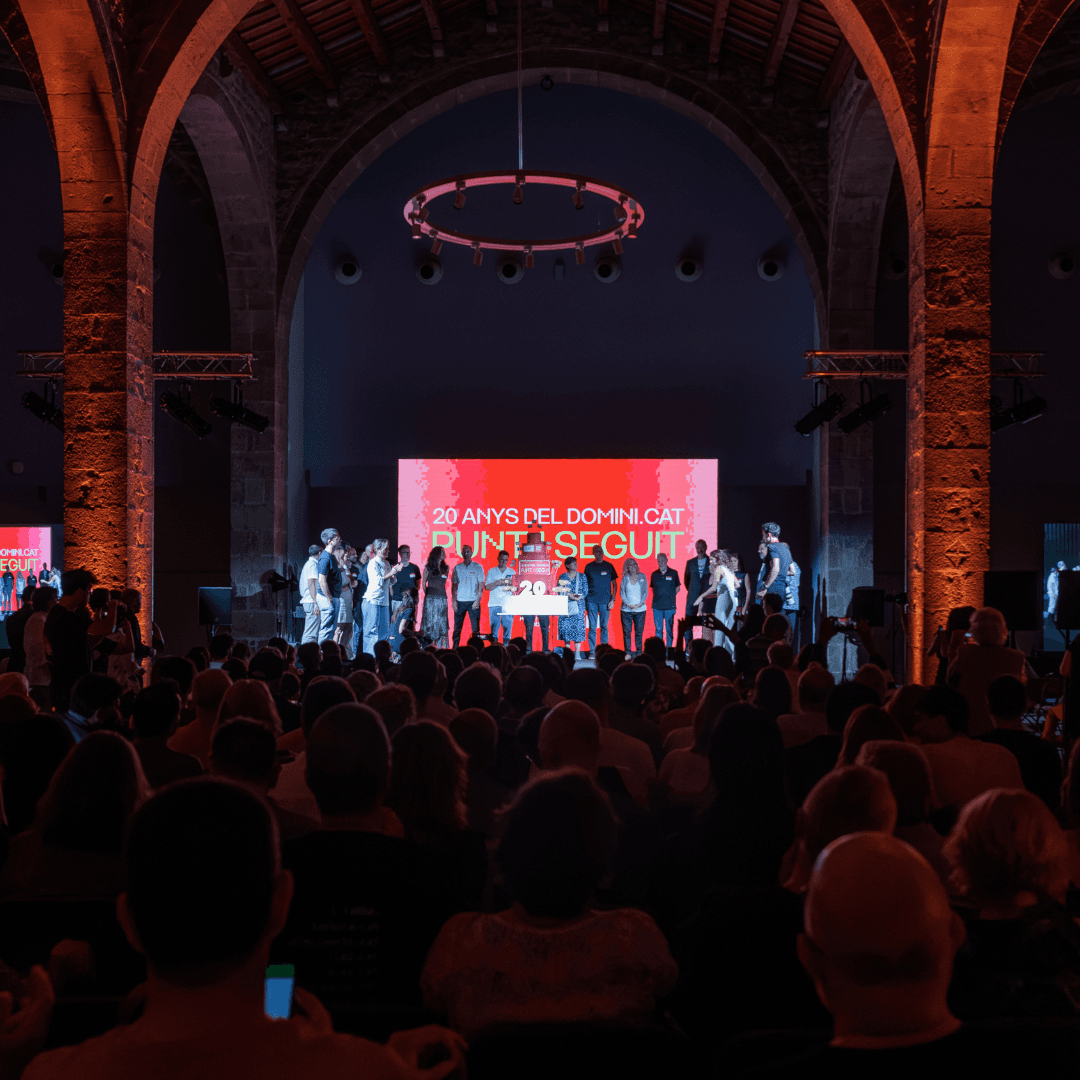
On 12 June, the .cat domain brought together at the Col·legi d’Arquitectes de Catalunya (the Catalan Association of Architects) some of the people who made its creation possible, along with representatives of the international domain ecosystem, institutions and professionals from the digital sector, to mark twenty years of the first Internet domain created to represent a linguistic and cultural community.
The event combined a look back at the origins of .cat with a reflection on the challenges currently facing the presence of Catalan on the Internet, in a context shaped by technological change and the evolution of the network.
A welcome to open the twentieth-anniversary celebrations
The opening address was given by Joan Abellà, Director General of Accent Obert, who wished to acknowledge the work of everyone who, two decades ago, drove forward an initiative that seemed unprecedented at the time.
Abellà described the .cat domain as a collective project built up over twenty years thanks to thousands of people, organisations, companies and institutions that have chosen to make Catalan a language present on the Internet as well.
«The .cat domain is a conversation that has been going on for twenty years.»
During his address he also recalled that the twentieth-anniversary commemoration will continue on 9 September, at the Barcelona Maritime Museum, with a celebration open to the .cat domain community.
Remembering the origins of .cat
The first round table, moderated by journalist Mercè Molist, brought together Amadeu Abril and Manel Sanromà, two of the main driving forces behind the .cat domain, to reconstruct the process that culminated in its approval by ICANN in September 2005.
The conversation looked back at the years leading up to the application, the technical and political obstacles the project had to overcome, and the role played by civil society, institutions and the professionals who helped make possible a domain that had no precedent.
Twenty years told through data
The second part of the event offered an overview of how the .cat domain has evolved from its creation to the present day. Beatriz Guzmán, Domain Director at Accent Obert, and Pep Masoliver, Chief Technology Officer at Accent Obert, presented 20 years in 20 figures, a tour of the key numbers that explain the growth of the domain and of the community it represents.
The session showed how the number of registered domains has evolved, its territorial distribution, the sectors that use .cat the most and other data that help to understand the impact this digital infrastructure has had over the past two decades.
The .cat domain seen from around the world
The third round table shifted the focus to the international arena. Moderated by Nacho Amadoz, Legal Director at Accent Obert, it featured Nico Caballero, Chair of ICANN’s GAC; Michele Neylon, international registrar at Blacknight; Ronald Schwärzer, representative of the .e domain and driving force behind .wien, .cologne and .koeln; and Manuela Becerra, Country Manager at Nominalia / Team Blue.
Participants agreed in highlighting the pioneering role of .cat as the first linguistic and cultural domain approved by ICANN, and the influence it has had on later initiatives launched by other language communities.
A number of congratulatory messages sent by international domain registries and organisations were also screened during the event, joining in the commemoration of twenty years of .cat and acknowledging its track record.
A celebration that continues
The event on 12 June marked the start of the commemoration of the .cat domain’s twentieth anniversary, a celebration that will continue on 9 September with an event at the Barcelona Maritime Museum dedicated to the community that has made this story possible over two decades.
OTHER POSTS YOU MIGHT BE INTERESTED IN