

20 years in 20 figures: the portrait of a community through the .cat domain

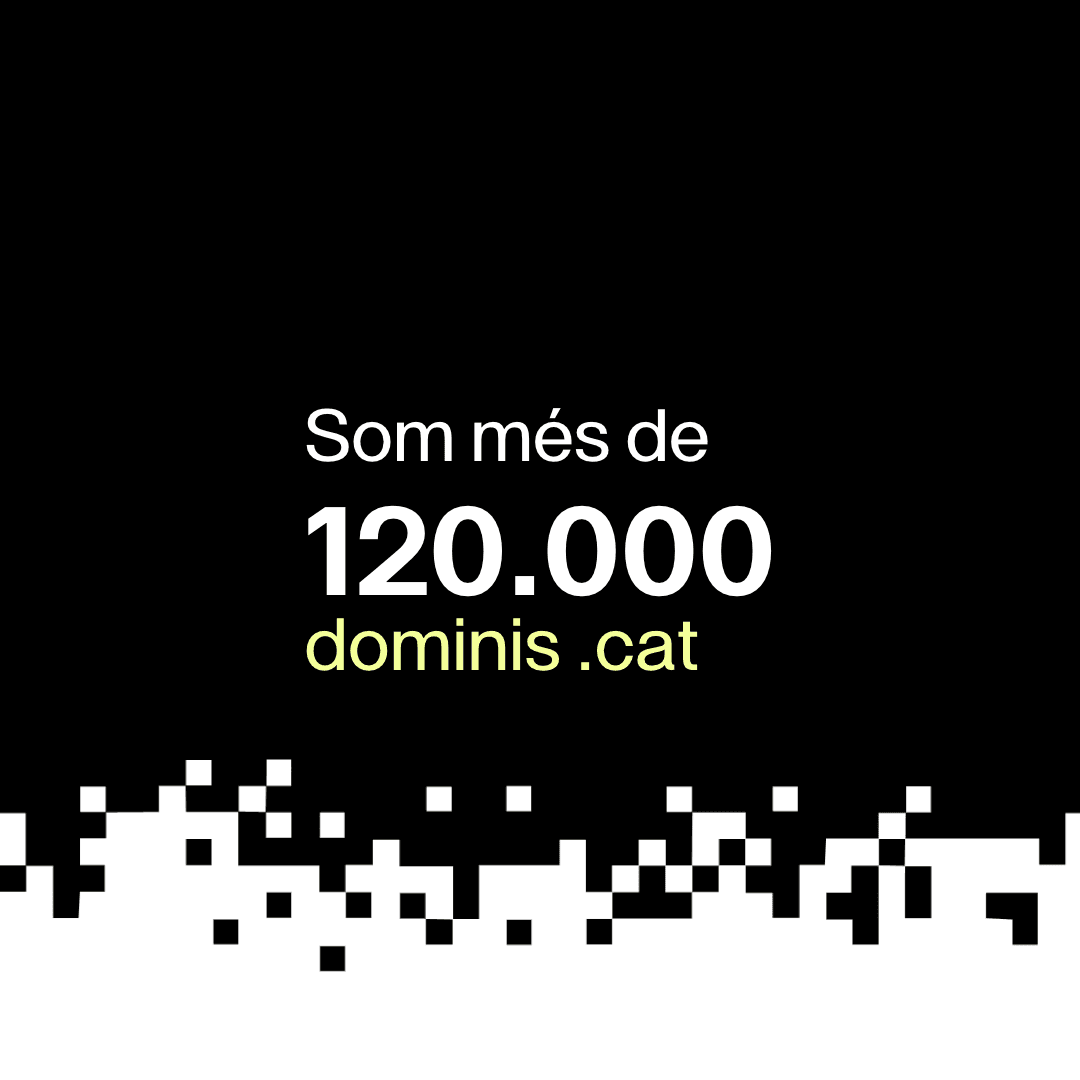
What twenty years of registrations tell us: more than 118,000 active domains and a renewal rate close to 88%, in the portrait of a community.
What do twenty years of registrations of an Internet domain tell us? Beyond the number of websites or the usual statistics, each registration speaks of a decision: that of a person, a company or an organisation that has chosen to identify itself digitally with .cat.
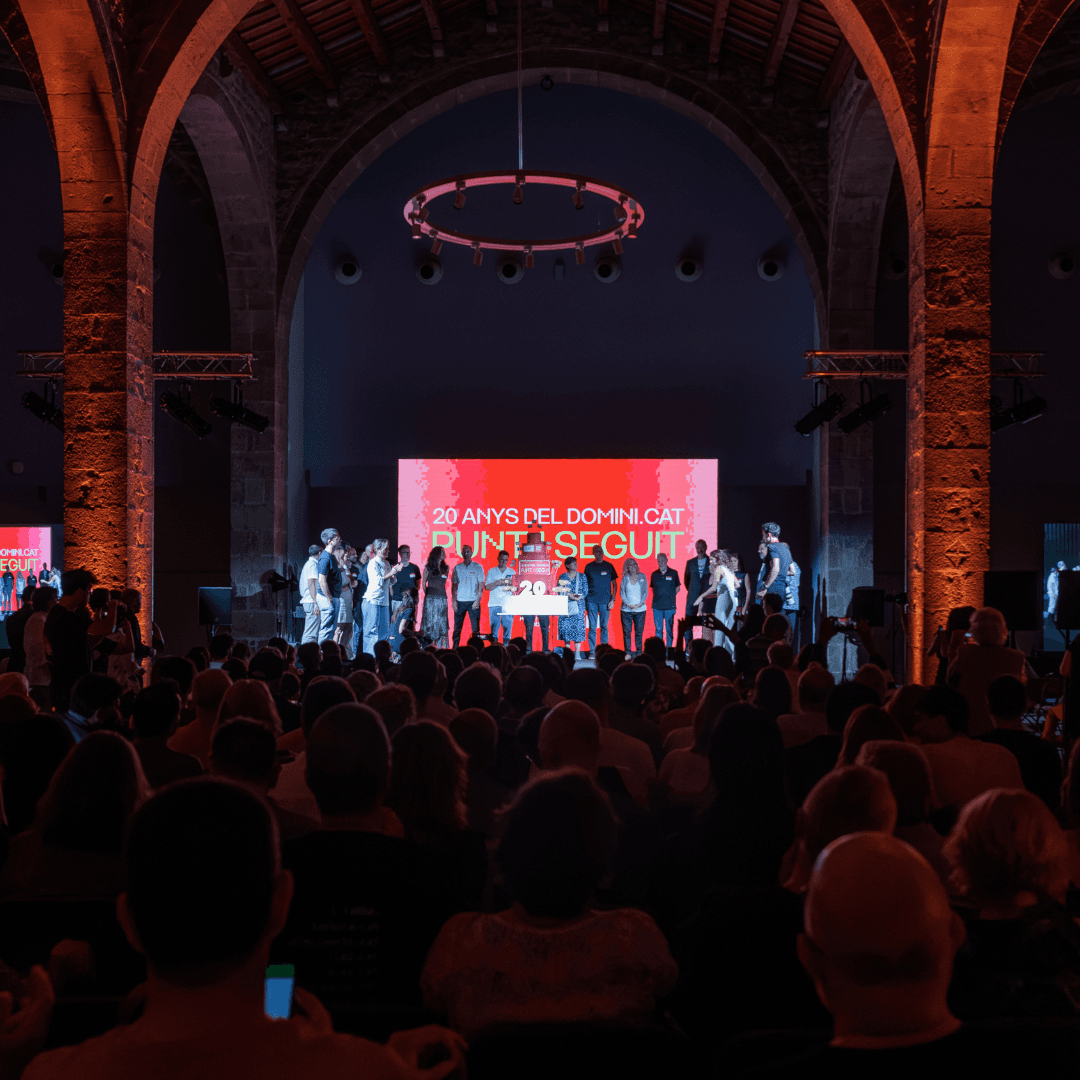
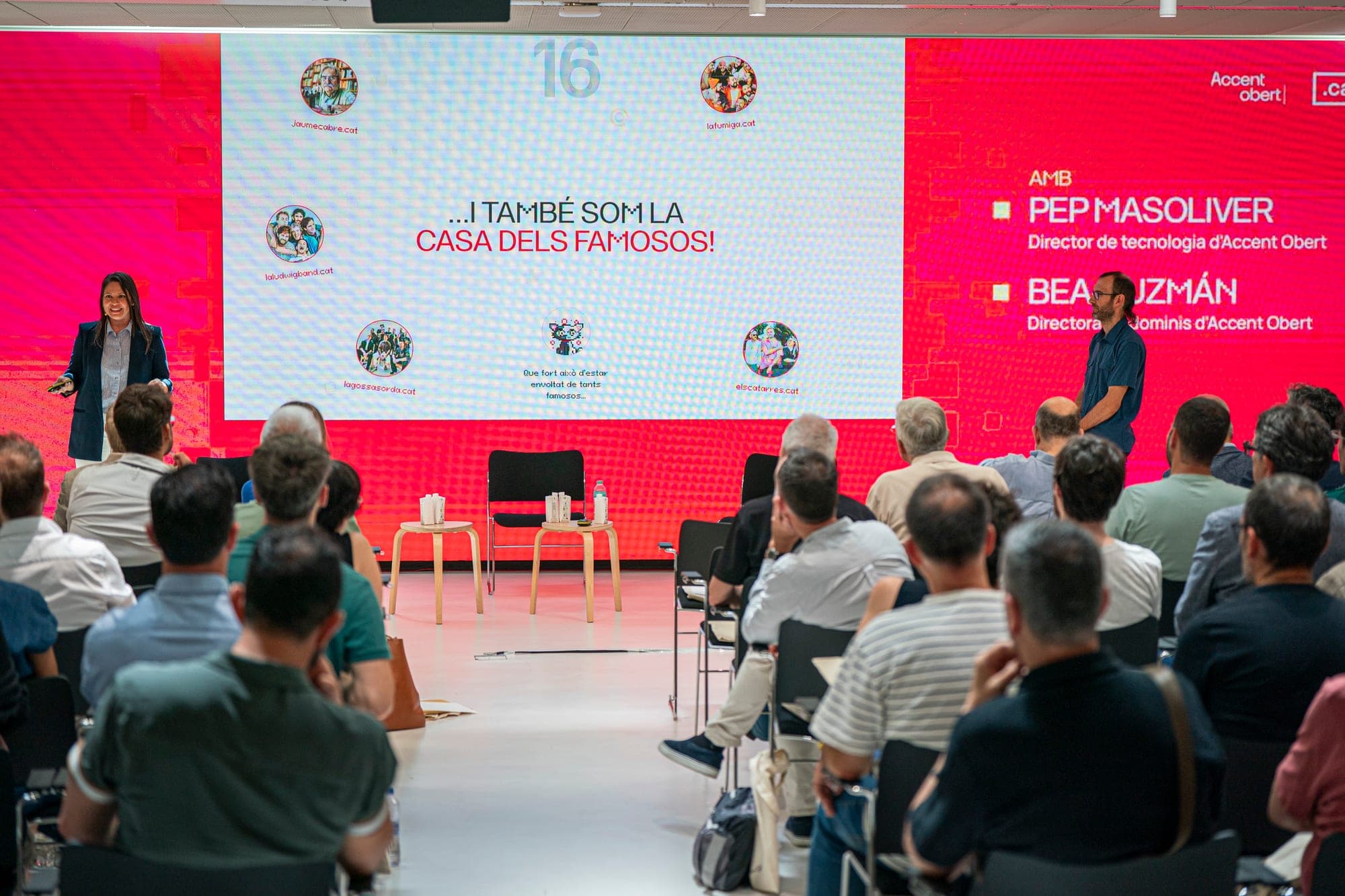
With this premise, Beatriz Guzmán, Domain Director at Accent Obert, and Pep Masoliver, Chief Technology Officer, presented «20 years in 20 figures», a talk that turned two decades of registrations into a portrait of the community that gives life to the .cat domain.
Twenty years that tell the story of a community
The first part of the talk looked back to recall the starting point. The .cat domain was born not only of a technical decision, but of a collective mobilisation that brought together 98 organisations, 2,615 companies and more than 65,000 people in support of an unprecedented application.
From that moment on, the data show the evolution of a project that has grown steadily to surpass 118,000 active domains, maintaining a renewal rate close to 88%, one of the highest in the sector.
But the speakers stressed that these figures do not only explain the growth of a domain registry.
«This is no coincidence. It is conviction.»
The .cat domain also maps out Catalan
Another of the presentation’s angles was geographical. Today, the vast majority of .cat domains are still concentrated in Catalan-speaking territories, but their presence has gradually spread much further.
The .cat domain is also present in dozens of countries, from the United States to Germany or China, often driven by the Catalan diaspora, but also by people and projects that have adopted Catalan as a digital language or that have wanted to connect with this community.
Among the curiosities shared were domains registered more than 19,000 kilometres from Catalonia, showing that .cat is today a global network.
Domains also tell us what we are living through
One of the most thought-provoking moments of the presentation was the analysis of the words that, year after year, have featured in new registrations.
Without needing to consult any newspaper archive, the domains make it possible to reconstruct some of the major moments of the past twenty years. The rise in registrations linked to Catalunya after the ruling on the Statute of Autonomy, the appearance of words such as república or junts during the years of the Procés, or the explosion of domains related to COVID during the pandemic show how major social events also leave a trace on the Internet.
For the speakers, this is a demonstration that the .cat domain is not an infrastructure detached from its surroundings, but a direct reflection of the moment its community is living through.
A diverse community
The presentation also covered more everyday and curious aspects of the domain. From the given names most present in registrations to the figures from the worlds of culture, media and sport who have chosen a .cat to identify themselves online.
There was also room to recall that the domain is part of the everyday life of castellers (human-tower) groups, third-sector organisations, universities, publishers, media outlets and small businesses, sketching out a digital ecosystem deeply rooted in the country.
Through all this data, the talk conveyed a single idea: .cat is much more than an Internet extension. It is a shared infrastructure that reflects the diversity, interests and evolution of the community that uses it.
Looking at the data to imagine the future
The last part of the presentation turned its attention to the challenges of the coming years. In a context shaped by artificial intelligence and new systems for accessing information, the speakers argued that the digital presence of the Catalan-speaking community will continue to depend on having its own identifiable, quality content.
That is why, beyond celebrating twenty years of history, «20 years in 20 figures» was also an invitation to keep building this collective footprint. Because each newly registered domain is not just an address on the Internet: it is a new line in the digital history of a language and a culture.
OTHER POSTS YOU MIGHT BE INTERESTED IN